


L'excellence en esthétique médicale.
Customer service: [email protected]
Customer service: [email protected]
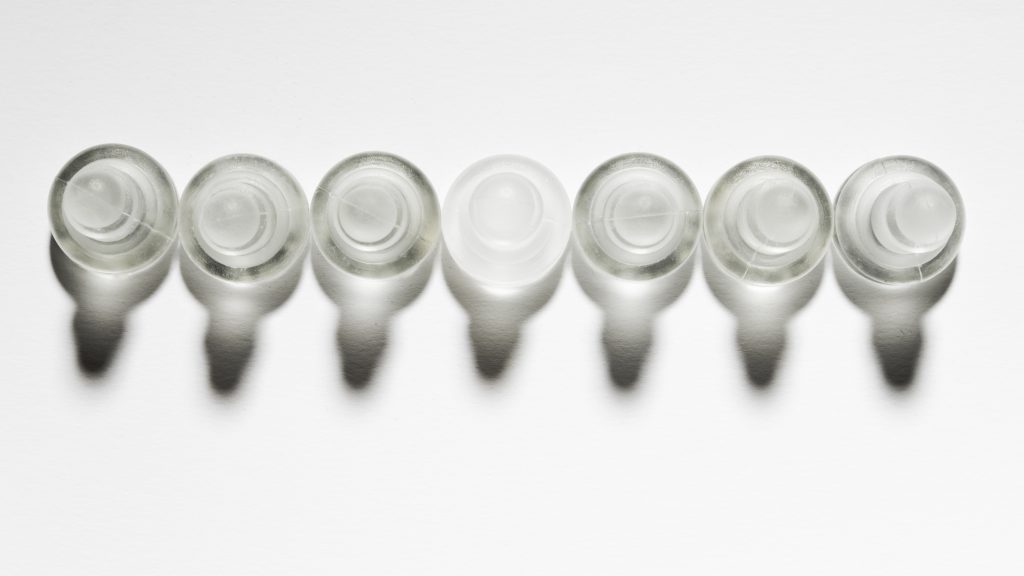
Hyaluronic acid has become a star ingredient in cosmetics. You see it on many products, but did you know that there are different types of hyaluronic acid? Each has specific properties that act differently on the skin. Let’s discover these differences together to help you make the best choice.
Hyaluronic acid is a molecule naturally present in our bodies. It is found mainly in the skin, joints and eyes. It is a polysaccharide (a type of carbohydrate) with a remarkable capacity to retain water.
In our skin, it plays an essential role in tissue hydration and elasticity. Unfortunately, its production declines with age. This decline contributes to the appearance of signs of skin ageing.
In cosmetics, hyaluronic acid is used for its moisturizing properties and plumping effect. It helps maintain skin hydration and reduce the appearance of fine lines.
The main difference between hyaluronic acid types lies in their molecular weight. This characteristic determines the size of the molecules and their ability to penetrate the different layers of the skin.
High-molecular-weight hyaluronic acid has large molecules. Because of their size, these molecules cannot penetrate the deeper layers of the skin.
They remain on the surface, forming a protective film that :
This type of hyaluronic acid is ideal for protecting skin against pollution and the sun. It provides immediate visible hydration.
This form of hyaluronic acid is obtained by fractioning the molecule into medium-sized pieces.
It penetrates slightly deeper than the high molecular weight form and :
Low-molecular-weight hyaluronic acid has much smaller molecules. This form can penetrate deeper into the epidermis.
Its benefits include :
This is the preferred type of hyaluronic acid for anti-aging treatments targeting wrinkles.
This lesser-known form has both hydrophilic (water-attracting) and lipophilic (fat-attracting) properties. Scientific research has shown that it can absorb more water than ordinary hyaluronic acid.
Cross-linked hyaluronic acid is obtained by a specific chemical process. This modification creates a highly stable molecule with great water-holding capacity.
This form is mainly used in aesthetic injections to fill wrinkles and create volume.
Dry skin naturally lacks moisture. They need a reinforcement of their cutaneous barrier. For this type of skin, choose :
Hyaluronic acid provides deep hydration while improving the skin’s appearance.
Contrary to popular belief, oily skin also needs hydration. Hyaluronic acid is particularly well-suited as it moisturizes without adding oil.
For this type of skin, opt for :
Hyaluronic acid helps regulate sebum production and prevent shine.
Sensitive skin can also benefit from hyaluronic acid. Studies have shown that even low-molecular-weight hyaluronic acid is well tolerated by this type of skin.
For sensitive skin, choose :
Hyaluronic acid has soothing properties that help reduce skin sensitivity.
To fight the signs of aging, the ideal choice would be :
To target wrinkles, low-molecular-weight hyaluronic acid will be more effective as it penetrates deeper[2].
Cosmetic products containing hyaluronic acid are applied directly to the skin. Their advantages:
To maximize the effectiveness of topical skincare products, apply them to slightly damp skin. This allows the molecule to capture water on the surface, amplifying its moisturizing power.
Hyaluronic acid injections are part of aesthetic medicine. They deliver more visible, longer-lasting results, but require the intervention of a qualified professional[6].
Injections are mainly used for :
The effects of injections generally last from 6 to 18 months, depending on the area treated[6].
Applied topically, hyaluronic acid increases hydration of the stratum corneum by around 10%. The effects are rapidly visible for hydration, but anti-aging benefits appear after around 4 weeks of regular use.
Injections offer immediate and more pronounced results. They work deeper into the dermis and are more effective in treating established wrinkles[6].

Not true. This idea often stems from incorrect application. Hyaluronic acid is a powerful moisturizer, but it works by attracting water.
Although the term “acid” may be misleading, hyaluronic acid has no exfoliating action.
Hyaluronic acid is suitable for all skin types, including oily and combination skin.
As we have seen, there are different types of hyaluronic acid, depending on their molecular weight. Each has specific properties and effects.
For optimum benefits, hyaluronic acid must be used in conjunction with other moisturizing ingredients. It attracts moisture, but this hydration must be sealed with a cream to prevent water from evaporating.
